Zoology
Introduction
Faculty Introduction
Student Speak
The department has highly qualified faculty with a strong commitment for teaching & research and is synonymous with quality education. Department of Zoology has received funds from DBT Star College Scheme. It has also been supported by the DST under FIST – I and FIST – II programmes. The departmental faculty is also involved in spreading awareness about various environmental issues to inculcate the spirit of sustainable development in youth.
Highlights
- New experiments and projects performed by students under DBT Star College Scheme.
- ICT based teaching with smart class rooms
- Outstanding Results & Progression
- State of the art infrastructure
- Spacious and well equipped modern labs
- Online assignments given to the students
- On & Off Campus placements
- Conducting various hands on training workshops, Seminars
- Research activities
- Department keeps on organizing student oriented activities like National seminars, extension lectures, workshops, educational trips etc.
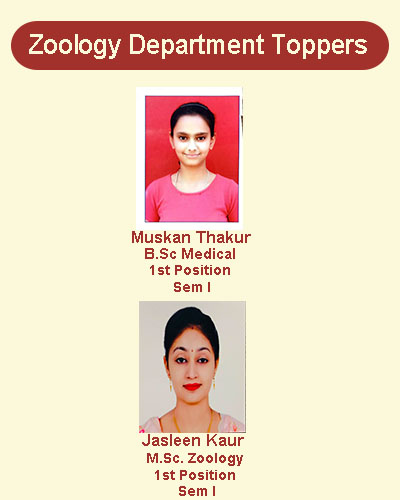
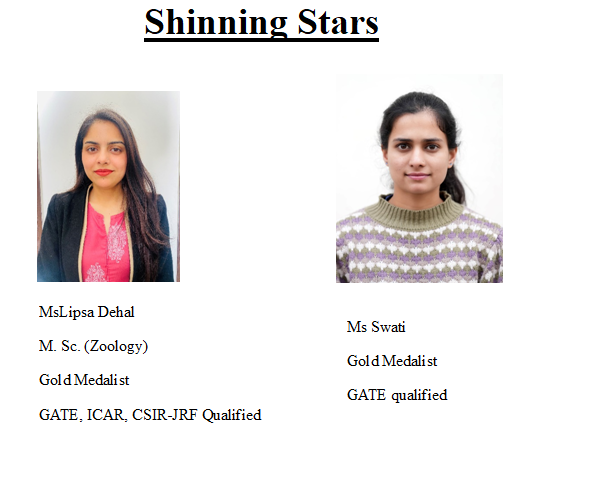
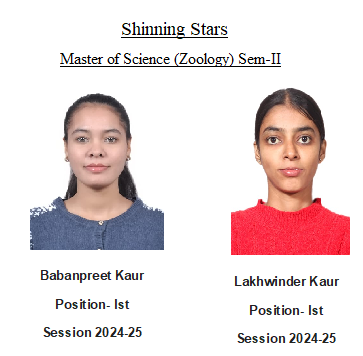
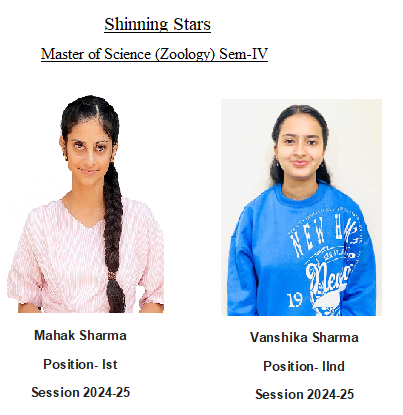
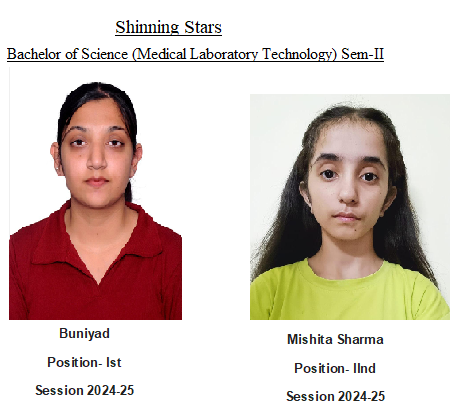
Department Toppers
Programmes Offered
- B.Sc. Medical
- B.Sc. (Medical Laboratory Science)
- M.Sc. Zoology
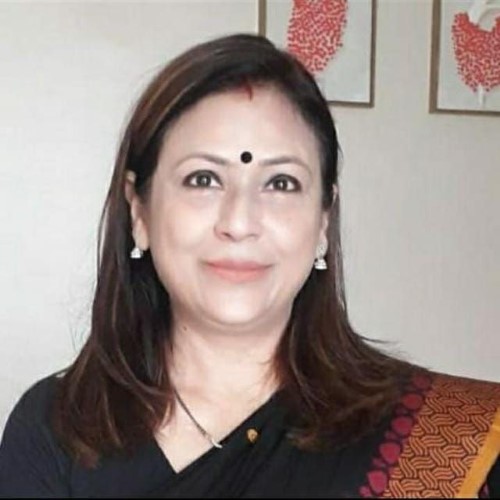
Teaching Faculty




Infrastructure
- The department has research laboratory equipped with Gel-Doc, Thermal Cycler, Refrigerated centrifuges, Nanodrop spectrophotometer, Electrophoresis units, Stereomicroscopes, MIPS etc.
- A well maintained museum with vast collections of specimens & rare skeletons.
- Two smart class room cum laboratories
- A Departmental Library equipped with about 600 books.
Why Zoology?
Zoology isn’t just a subject- it’s the study of animal life and biodiversity that shapes our planet. If you are curious about living organisms, ecosystems, and wildlife, zoology opens the door to understanding nature, conservation, and sustainable living.
Exciting Careers with Zoology
Studying zoology offers diverse and impactful career opportunities. With zoology as your foundation, you can explore careers like:
Research & Innovation
- Zoologist (Wildlife Biology, Marine Biology, Entomology)
- Wildlife Researcher
- Conservation Scientist
- Animal Behaviorist (Ethologist)
- Molecular Biologist
- Biotechnologist, Geneticist
Environment & Conservation
- Wildlife Conservation Officer
- Forest Officer
- Environmental Consultant
- Biodiversity Specialist
- NGO & Wildlife Organization Roles
Healthcare & Applied Sciences
- Veterinary Assistant / Animal Health Worker
- Parasitologist
- Toxicologist
- Biomedical Researcher
- Laboratory Technician
Industry & Applied Fields
- Fisheries & Aquaculture Field
- Sericulture / Apiculture Field
- Pest Control & Management
- Environmental Impact Analyst
Education & Academia
- Lecturer / Professor
- Science Communicator
- Research Scholar
- Competitive Exam Mentor (NEET, UPSC, State Exams)
Who Should Choose Zoology?
If you are:
- Curious about animals and wildlife
- Interested in nature and biodiversity
- Passionate about conservation and environment
- Fascinated by animal behavior and ecosystems
- Looking for a meaningful and nature-connected career
Research Facilities
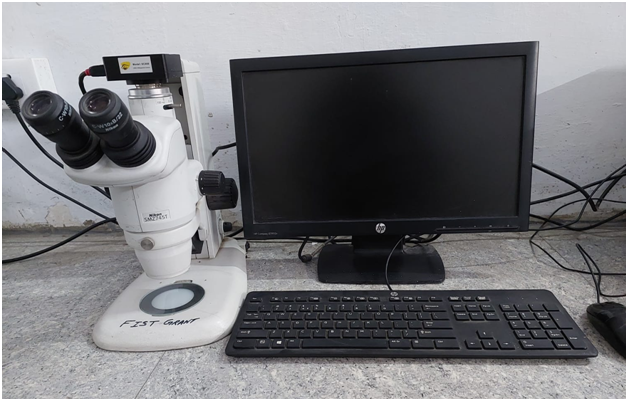
1. Stereoscope Binocular Microscope with MIPS
Specification:
With photography Nikon Software, Vizutech Camera
Stereo microscopes can be used in a variety of applications. It is used to study the specimen in real-time whilst it is still being observed.
Grant: FIST
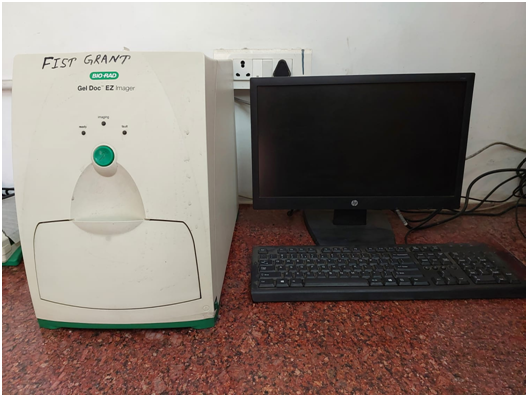
2. Bio-Rad Gel Documentation System
Specifications:
Image resolution≥4 megapixels; and high resolution imaging for resolving closely spaced bands on a gel or blot.It requires no camera adjustments for image acquisition.
It is used to record and analyze the results of gel electrophoresis experiments.
Grant: FIST
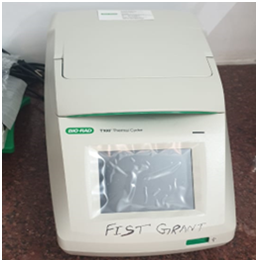
3. Bio Rad Thermal Cycler
Specifications:
Gradient capability, Gradient accuracy; ±0.5°C of programmed temperature, Row uniformity;±0.5°C well to well 30 sec gradient range; 30-100°C, sample capacity 96×0-2 ml tubes, 0.2 ml tube strip or 1x 96 well plates, temperature range 4-100 °C.
It is used to amplify DNA and RNA samples by the polymerase chain reaction.
Grant: FIST
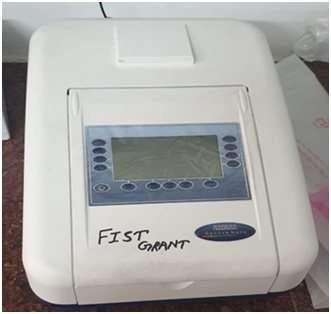
4. Nanodrop Spectrophotometer
Specifications:
- 3 in1 micro volume spectrophotometer; Wavelength: 198-1000 nm
- Min. sample size: 0.5 ul (at 0.2 mm), 1.0 ul (at 0.5 mm); Max. sample size: 5 ul
- DNA measurement mode: dsDNA, ssDNA, RNA, Oligonucleotides, 260/280, 260/230, variable ratio
- Protein measurement mode: BCA, Bradford, lowry, Biuret, Direct UV
- It measures the concentration of DNA, RNA, and protein in a small liquid sample.
Grant: FIST
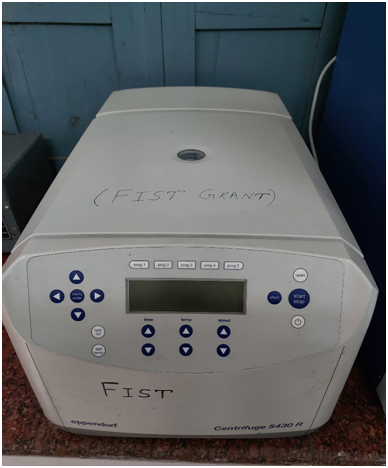
5. Eppendorf Centrifuge
Specifications:
High Speed Benchtop 5804R, 15/50, 1.5/2 ml, Rotor F-35-6-30, incl.rotor lid and adapter 6×15 ml/50ml falcon/conical tube rotor for use with centrifuge 5430/R maximum RCF ;7197xg maximum speed;7830 rpm
It is used to separate fluids, or liquids based on density. In research, centrifuges are used for cell, organelle, virus, protein, and nucleic acid purification.
Grant: FIST
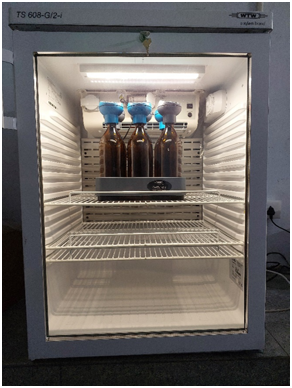
6. BOD Incubator with Oxitops
Specifications:
BOD (Biochemical Oxygen Demand) incubator is a specialized laboratory equipment used in measuring the amount of oxygen consumed by microorganisms in water or wastewater samples.
The BOD test is a widely used method to determine the level of water pollution and the effectiveness of treatment processes.
Grant: CURIE
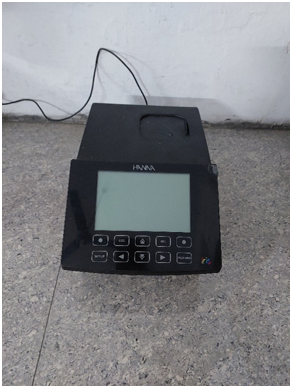
7. Hanna Spectrophotometer
Specifications:
The HI801 iris is a sleek and intuitive spectrophotometer that allows for measurement of all wavelengths of visible light.
Iris features precise wavelength selection between 340 nm to 900 nm for complete method compliance and accuracy that is necessary in industries like professional laboratories, water treatment facilities, wineries, and more.
Customization options include multiple cuvette shapes and sizes, custom calibration curves, and methods.
Grant: CURIE
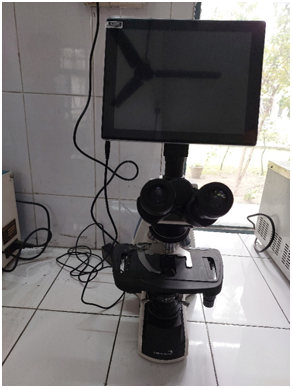
8. Trinocular Compound Microscope Model: DGSenser View Star Brand (Labovision)
Specifications:
A Trinocular microscope has two eyepieces like a binocular microscope and an additional third eyetube for connecting a microscope camera.
A Trinocular microscope allows for the user to not only take pictures, but also record videos, which can be saved for future references. Itgives an advantage that an instructor can show the students what he/she is looking at, or observe how the student is using the microscope.
Grant:DBT
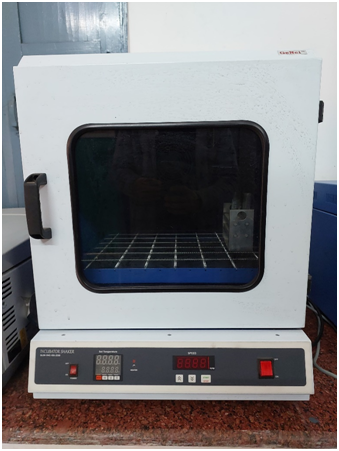
9. Incubator Orbital Shaker (With Universal Tray)
Specifications:
Brushless induction Motor with variable frequency drive suitable for continuous operations
Counter balanced mechanism for high stability in uneven load of different sized flasks
Built–in microprocessor thermocontroller provides constant temperature control in the incubator chamber.
It is used for mixing of biological liquids as well as for incubation and cultivation of biological liquids according to the operator set program
Grant: DBT
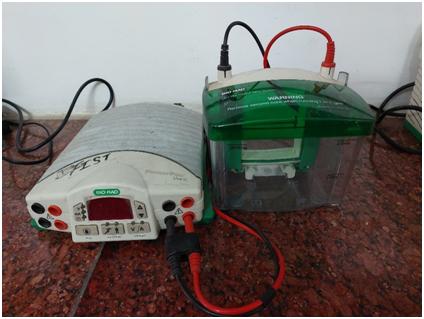
10. Vertical Electrophoresis Unit with PowerPac Bio-Rad
Specifications
Programming in a compact, stackable case
Timer control and constant voltage or constant current output
Ability to pause and resume a run.
It is used in the separation of DNA fragments for DNA fingerprinting, for DNA profiling for taxonomic studies, to analyze results of polymerase chain reaction and genes associated with particular illness.
Grant: FIST
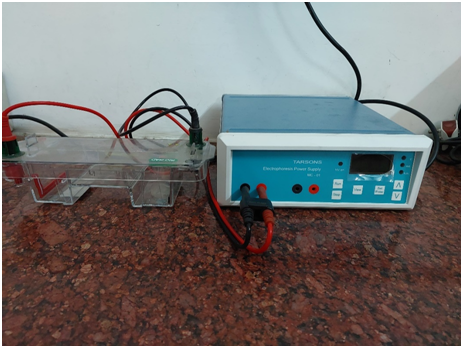
11. Horizontal Electrophoresis Unit withPowerpac Basic Power Supply (BioRad)
It is used for separating the mixtures containing DNA and RNA molecules while vertical gel electrophoresis is ideally used in separating proteins.
It offers the most versatile solution for DNA and RNA agarose gel electrophoresis
Grant: FIST
Academic Facilities
| S. No. | Programme | Syllabus Link |
| 1. | B. Sc. (Medical) Sem I-IV | https://www.kmvjalandhar.ac.in/wp-content/uploads/2026/09/B.-Sc.-Medical-Semester-I-IV-1.pdf |
| 2. | B. Sc. (Medical) Sem V-VI | https://www.kmvjalandhar.ac.in/wp-content/uploads/2026/09/B.-Sc.-Medical-Sem-V-VI-2-1.pdf |
| 3. | B. Sc. (Medical Laboratory Technology) Sem I-IV | https://www.kmvjalandhar.ac.in/wp-content/uploads/BSC-MLT-SEM-I-IV-2.pdf |
| 4. | M. Sc. (Zoology) Sem I-IV | https://www.kmvjalandhar.ac.in/wp-content/uploads/5.-M.-Sc.-Zoology-websitesyllabus-Sem-I-IV-2025-26.pdf |